A buyer brief, comparable material options, clear supplier responsibilities. Independent sourcing partner — not a mill catalog.

Procurement services

SwatchHaven Procurement quotes for comparable upholstery programs

  1. Brief
  2. Swatch
  3. Bulk

This page supports supplier matching. It does not introduce a new measured landing keyword.

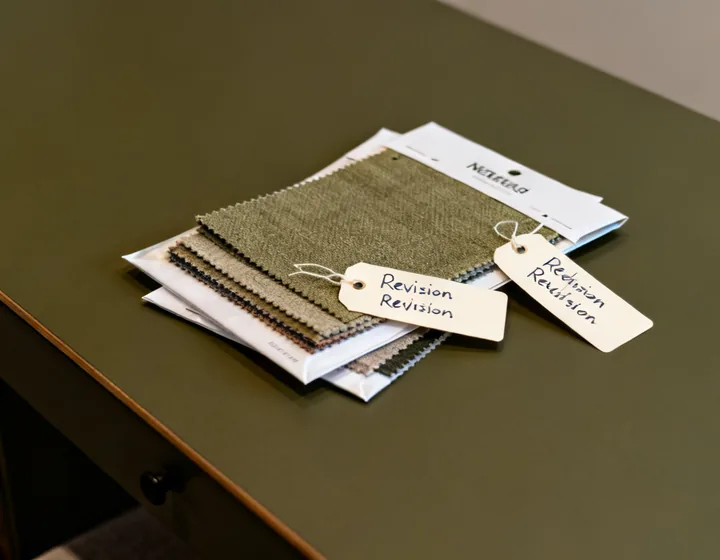
Sample packets tagged with revision numbers on a sourcing desk

Supplier and sample handoffs

A comparable request for home textile and upholstery quotations must name what each mill is answering. SwatchHaven Procurement coordinates those answers; it does not own looms, dyehouses or branded inventory. When a buyer starts from a third-party reference, treat that name as a search clue only. Ask proposed suppliers to quote an exact article, then mark every fiber, yarn, construction, GSM, usable width, backing or finish change before anyone treats the option as interchangeable.

Define deliverables and the approval sequence

State whether the first package is a stock cutting, a lab dip, a strike-off, or a sewn pre-production panel. Upholstery programs often need backing confirmation and an abrasion method with edition, while drapery programs need lightfastness and heading-related yield. Write quantity per color and total with yards, meters or rolls, plus the US destination and the sampling versus bulk timing. If coating, lamination or soil-release finish is in scope, separate those stages so a quotation can list inclusions and exclusions. Optional budget should name currency and whether the figure is per yard or for the complete order. High-end, mid-range, budget or undecided is a buyer preference about surface, customization and service intensity, not a verified mill grade.

Record supplier exceptions and sample revisions

Mills commonly propose a substitute weave, a different pile height, an acrylic rather than a cotton warp, or a narrower usable width that changes covering yield. Those are not clerical notes. Capture the exception, the sample identity, the reviewer, the date and the permitted deviation. A second lab dip that shifts under tungsten versus daylight can still fail the interior standard even if the mill calls it a match. Keep revision letters on the same article code so later bulk lots are not compared against an abandoned cutting. Do not copy competitor platform claims about mill counts, stock or savings into this file; only the documents tied to the quoted piece belong in the comparison.

Agree inspection responsibility and export handover

Decide who inspects rolls, who pays for third-party tests, and which AQL or defect map applies to the awarded construction. Bind tensile, tear, pilling, colorfastness or flame reports to method, specimen conditioning, laboratory, date and the exact article. Country-of-origin and fiber-content labeling for covered US textile products needs qualified review; this site does not issue those determinations. Freight, duties, packing and sampling charges must sit on the same page as unit price, or the comparison collapses. After award, record which documents travel with the shipment and which remain mill-held. Independent coordination ends at a documented handoff, not at a promised ship date.

If a required field is still open, keep it open. Forcing a number into GSM, abrasion cycles or flame class to make a spreadsheet tidy is how non-equivalent upholstery cloth enters a program. Send the unresolved list with the RFQ rather than waiting for a perfect brief.

Send the quotation scope

Share the approval sequence, known exceptions and destination so mill responses can be lined up on one basis.